AORA Studio
Should Men Do Reformer Pilates?
Short answer: yes. Here is the longer one.
Last updated February 2026
Let us get this out of the way
Pilates was invented by a man. Joseph Pilates was a boxer, gymnast and self-defence instructor who developed his method to rehabilitate injured soldiers during World War I. The idea that pilates is somehow not for men is a marketing accident, not a reflection of what the practice actually involves.
Walk into any reformer studio and you will find exercises that challenge elite athletes. Heavy spring resistance, single-leg stability work, full-body coordination under tension. This is not gentle stretching. It is controlled, precise strength work that exposes weaknesses most gym programmes never touch.
The reason more men are discovering reformer pilates is simple: it works. And it works on the exact areas that traditional gym training tends to neglect.
What men notice first
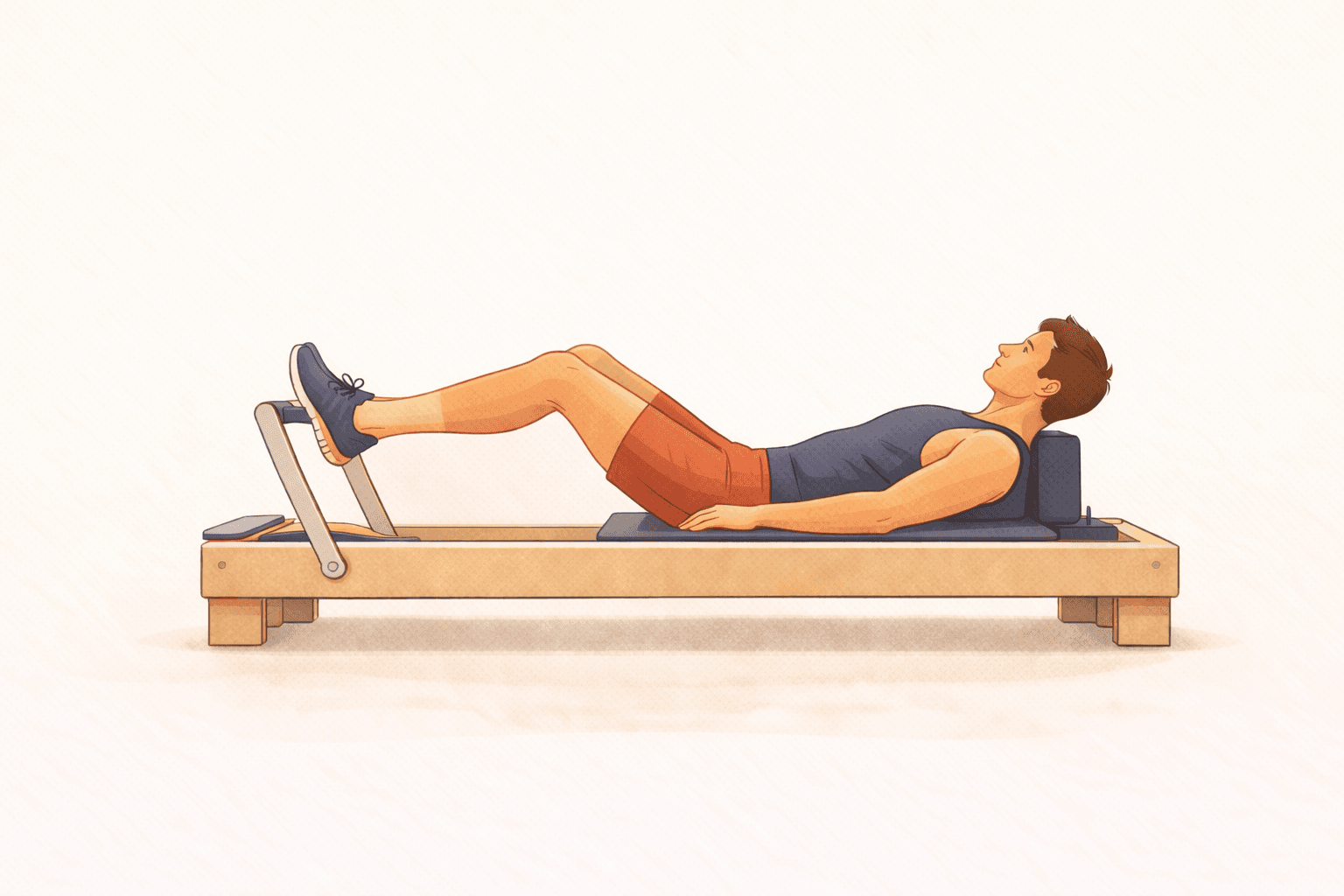
The most common reaction from men after their first reformer class is surprise. Not at how easy it was, but at how difficult certain movements turned out to be. Men who can bench press their body weight often struggle to hold a stable pelvis during single-leg footwork on the reformer.
This is not a fitness failing. It is a specificity gap. Gym training typically builds large muscle groups through bilateral, heavy-load movements. The reformer asks for something different: precise control, deep stabiliser engagement, and single-sided balance. These are the qualities that prevent injury and improve functional performance.
Within a few sessions, most men notice genuine improvements in posture, lower back comfort, and the way their body moves outside the studio. These are not subtle changes.
The flexibility problem
Most men know they are not flexible enough. They also know they are not going to spend 30 minutes stretching after every gym session. Reformer pilates solves this by building flexibility into the workout itself.
Every exercise on the reformer involves moving through a full range of motion against resistance. Your hamstrings lengthen under load during leg press work. Your hip flexors open during lunges on the carriage. Your thoracic spine mobilises during rotation exercises. You are stretching and strengthening simultaneously.
After a month of regular sessions, the difference in mobility is noticeable. Squats feel deeper. Shoulders move more freely. The chronic tightness that comes from years of desk work and gym training starts to release.
Core strength you can actually use
There is a difference between surface-level core strength and the deep stabilisation that protects your spine under load. Crunches and planks build the former. Reformer pilates builds both.
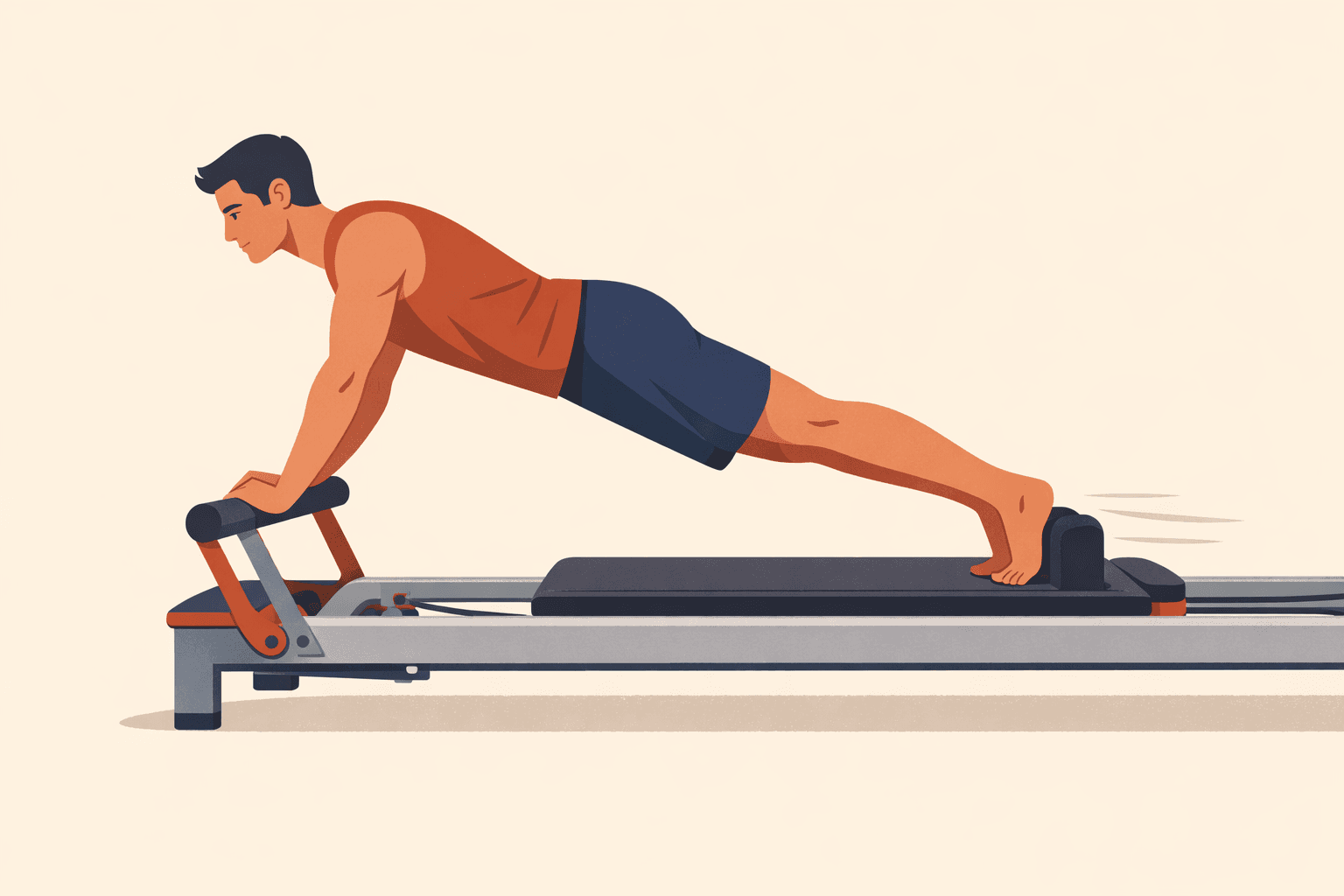
The unstable carriage forces your deep core muscles to engage on every exercise, whether you are working your legs, arms or back. This is not optional engagement that you need to consciously activate. The carriage moves, so your core must stabilise. It happens automatically.
For men who lift weights, this translates directly to better performance under heavy loads. A stable, responsive core means safer deadlifts, stronger squats, and less risk of the lower back injuries that sideline so many lifters.
It handles the aches that gym training creates
Most men who train regularly carry some combination of tight hip flexors, stiff thoracic spine, rounded shoulders and lower back tension. These are not injuries. They are the predictable result of too much sitting, too much anterior-dominant training (bench press, bicep curls, crunches) and not enough posterior chain and mobility work.
Reformer pilates directly addresses all of these. Spinal articulation exercises mobilise the thoracic spine. Shoulder stability work opens the chest and strengthens the upper back. Hip flexor stretches on the carriage undo hours of sitting.
Many of our male clients at AORA describe the reformer as the thing that finally fixed their back pain, or the reason their shoulders stopped clicking. It is not physiotherapy, but it does the preventative work that keeps you out of the physio clinic.
What about the class environment?
This is the unspoken concern, so let us address it directly. Yes, reformer pilates classes currently skew female. No, this does not matter once you are in the room.
The reformer is an equaliser. Everyone is working at their own spring resistance, focused on their own body, following their own capacity. Nobody is watching you struggle with a hip flexor stretch because they are too busy dealing with their own.
At AORA, we keep classes small, the studio has a calm, focused atmosphere, and the instructors are used to working with complete beginners of all backgrounds. You will not feel out of place.
How to start
Your first class will involve learning the basic positions and getting comfortable with the reformer itself. The instructor will set your spring resistance and guide you through the fundamentals. No prior experience is needed.
Wear fitted clothing that allows you to move freely. Socks with grip are ideal (we sell them at the studio if you do not have any). Come 10 minutes early for your first session so we can show you around.
One to two sessions per week is a good starting point. If you are also doing gym training, treat the reformer as your mobility and stability day. It complements heavy lifting rather than replacing it.
- No prior experience or flexibility required
- Wear fitted clothing and grip socks
- One to two sessions per week is a good starting point
- Complements gym training rather than replacing it
- Expect to feel muscles you did not know you had
“The strongest people in the room are the ones who train what they are worst at.”
Try it for yourself
Book 3 reformer pilates classes at our Bristol studio and see what the fuss is about.